What are kids learning from the way adults handle conflict? According to Barbara Simmons, they are learning everything. On this episode of Bucks Co Living, I talked with Barbara Simmons of The Peace Center, a longtime educator and mediator in Bucks County. She explained how anger can hide fear, how to teach accountability without shame, how social media changed bullying, and why adults must model the behavior they want to see.
Quick takeaway: Peace begins at home. Children copy how adults handle anger, so the best lesson is the one you model.
How The Peace Center Began and How Barbara Simmons Found Her Calling
The Peace Center began in 1982. Barbara arrived around 1987, impressed by how caring and focused the small nonprofit was. She told me everyone she meets wants peace, but most people do not know how to work for it. Peace takes action, not just calm.
She first came to a talk about nuclear disarmament. She started volunteering, then became an executive assistant to the director, and later the director herself. Her paid job started around 1989 at about $15,000 a year. As she puts it, peace does not pay well.
She then trained as a mediator, a restorative justice facilitator, a conflict resolution specialist, and in trauma-informed conflict resolution and crisis management. She retired during COVID and came back about five years ago because the center was close to closing. The center treats violence as a public health issue and works with kids in grades K through 12 and with adults.
Why Anger Often Hides Fear
Barbara Simmons, educator and mediator at The Peace Center, admits she was not good at conflict herself. She had to learn that fear comes before anger. That changed how she saw trauma, and it shapes every Peace Center program.
"Adults are not good at dealing with conflict. I was in that category myself. I had to do a lot of work to understand that fear is the emotion that actually comes before anger. And once I learned that, it was like, wow, so my anger is based in fear. And so it might be fear around looking like you don't know what you're talking about, or feeling embarrassed or humiliated, or feeling disrespected. Once I understood that, I was able to understand trauma better and how that feeds into anger. All our programs are trauma-informed, and they're all centered around addressing conflict and violence and racism and homophobia and all the isms that take away the dignity of another person."

Teaching Kids Accountability Without Shame
Barbara parented the way she was parented, with little guidance on emotions. Then she learned new skills and brought them home. Her daughter, at 12, was not thrilled.
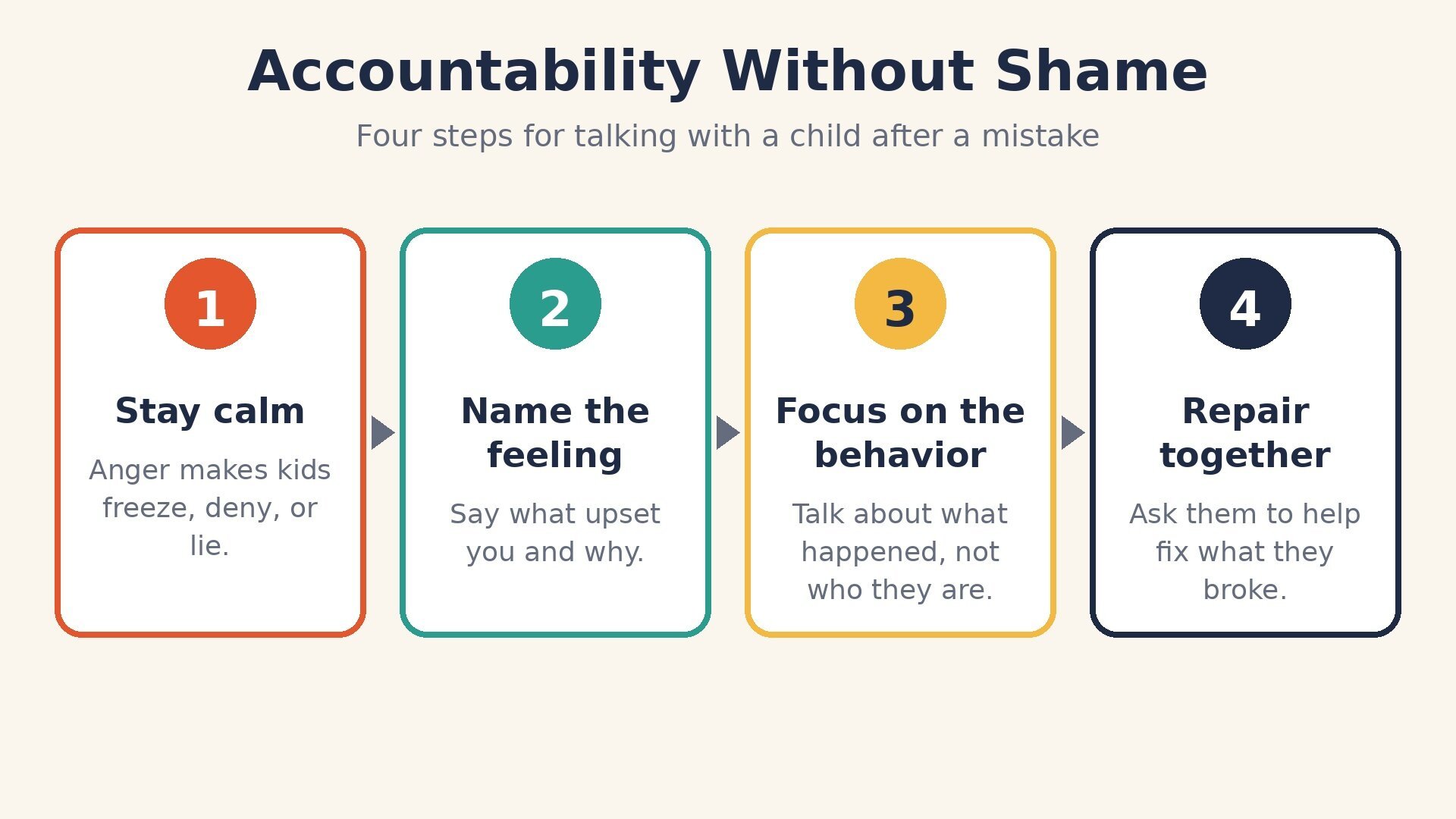
Say something got broken. Instead of exploding, Barbara would name how she felt and why, and she would ask her daughter to help fix it. That approach is teaching kids accountability without shame. Kids who feel shame run, blame others, or lie.
"Without these tools, they don't learn how to take responsibility for their behavior. And when they take responsibility for their behavior, they're able to go into more of a problem-solving space. But if you're coming at them with anger because something just got broken in your house, then they're going to freeze up and they're going to deny it, or they're going to lie. They didn't mean to break something. That wasn't their intention, but I'm all angry and now they've got some shame involved. So peace really does begin in the home."
Social Media Bullying: Why It Hurts More and Lasts Longer
When I asked about bullying, Barbara said schools have more awareness today, but social media bullying has added a new level of trauma. Kids are targeted for race, ethnicity, and sexual orientation. It happens in hallways, lunchrooms, and online, away from adults.
The scars last. Barbara once got a call from a 30-year-old woman getting ready for her high school reunion who still wanted help with the bullying she felt back then. She has also spoken with people who were bullied 45 years ago.
Years ago, schools often said online bullying happened off campus. Telling kids to just ignore their phones does not work, because they care deeply what peers think. Barbara wants skills taught like math and English.
"Schools will have a very separate program about it, as if the rest of what they're learning is not attached to bullying. And I really think it needs to be skills that are taught in the same way that we teach math and science and English, the tools that we need to teach kids how to be an ally, how to intervene when somebody is being bullied. Kids are scared to intervene because they know the bully's going to turn on them. So we teach them other ways to be an ally for somebody who's getting bullied. Those are life skills. If kids learn them early on, they're able to have a healthier life."
She also worries about phones. Kids get them at 10, 11, or 12, and adults on their phones at dinner set the example. She says gun violence is now the leading cause of death for young people, which is why the way we handle conflict has to change.
Emotional Safety at Home: Four Kinds of Safety
I asked what emotional safety means. Barbara wants kids to feel safe in four ways:
| Safety | What It Looks Like |
|---|---|
| Physical | Feeling safe in their bodies and surroundings |
| Emotional | Adults manage their own emotions and never use name-calling |
| Moral | Adults walk their talk |
| Social | Adults advocate and help kids intervene when bullying happens |
Emotional safety at home does not mean giving up discipline. Discipline should guide a child. Sending a child to their room until they are nicer only makes them angrier. For moral safety, Barbara remembers her mother telling her not to smoke while smoking herself.
Peace Center mediator Barbara Simmons also offered a tip for my family. Put a basket in the middle of the dinner table, drop everyone's phones in it, and talk for 30 minutes.

Live as if an Eight-Year-Old Is Watching
Kids watch how we talk to a plumber, how we hang up the phone, and how we react in traffic. Barbara described a driver who yelled at her on the road. Her first instinct was to chase him down. She chose not to.
Her rule is to live as if an eight-year-old is always watching. Even though her own kids are grown, she asks what that child would learn from her reaction.
Finding Common Ground Without Staying Silent
Barbara still has hope for Bucks County. She meets people who want to be part of the solution. She also sees reasons for concern, including rising prejudice. Her answer is to speak out.
Finding common ground does not mean staying quiet. The Peace Center works with people on all sides, including those referred through the district attorney. If they show even a little remorse, she can work with them. After an event that demonized another religion, she met with members of that community to plan an educational response.
She also does the inner work. She cannot work in places like Northern Ireland, Rwanda, or South Africa while carrying anger. Interviewing Hiroshima and Nagasaki survivors who chose forgiveness moved her to tears.
She says she would stand up for another family's child even if they would not stand up for hers. She believes we are all connected, and that bringing people together across divides takes work from all of us.
How to Get Involved With The Peace Center
Barbara invites people to visit The Peace Center's website to see programs and get involved. Some programs are online, including one on listening for social change.
Frequently Asked Questions About Conflict Resolution for Kids
How can parents teach kids to handle conflict in a healthy way?
Stay calm, listen first, focus on what happened, and help children see how their actions affected others. Adults must model the same behavior.
How do you discipline a child without making them feel ashamed?
Focus on the behavior, not the child. Ask what happened, who was affected, and how to repair it.
How should parents help kids deal with bullying on social media?
Teach children to recognize harmful behavior, avoid escalating, seek help from a trusted adult, and support someone who is targeted.
Why do kids copy how adults handle anger?
Children learn by watching how adults handle stress, disagreement, and mistakes.
Connect With Barbara Simmons and Anthony Paul Pinto
You can find Barbara on LinkedIn and learn about The Peace Center. For more local conversations, visit Bucks Co Living or find me on Facebook, Instagram, and LinkedIn. Thank you to Barbara Simmons of The Peace Center for sharing her wisdom.
Apply to Be a Guest on the Bucks Co Living Podcast
Bucks County is full of community voices doing meaningful work. If you're shaping life here, in real estate or beyond, I'd love to share your story.
This podcast is produced by the Icons of Real Estate - #1 Real Estate Podcast Network. If you are a real estate professional, apply to be a guest speaker across the network.